The golden rule of fundraising is that supporters who give a second time are far more likely to give long-term. Subsequently, many nonprofit fundraising strategies focus on encouraging new supporters to commit to future gifts.
While a certain percentage of new donors are only interested in making one-time gifts, nonprofits that employ the right strategies can turn many of them into recurring supporters. To help your nonprofit create lasting supporter relationships, this guide will explore five strategies for connecting with new donors.
1. Deliver prompt, personal acknowledgements.
After a supporter donates, send them a thank-you message within 48 hours. Many nonprofits leverage automated thank-you messages to ensure donors are recognized promptly, but generic emails only go so far in making donors feel appreciated.
Start your relationship with new donors off on the right foot by sending them gift acknowledgment messages that:
Feel personal. Create message templates that can be filled in with personal details for each supporter. For example, you might reference their donation amount or the projects the donation will support. Additionally, have a notable member of your team—like a board member or executive director—sign letters, cards, and other materials you send supporters to give these messages a human touch.
Show impact. Reinforce donors’ decision to give by sharing the potential impact their gift will make. For example, you might provide impact statistics or a story of an individual who will receive help, such as how your animal shelter provided life-saving care for a kitten that needed emergency surgery.
Invite further engagement. While a thank-you message is not the place to ask for another gift, you can use them to promote other involvement opportunities. For example, you might invite new supporters to subscribe to your newsletter, follow you on social media, read program updates, or check out your upcoming events.
All donors should receive a thank-you message, but you may go the extra mile for major giving prospects. For these supporters, you might send a handwritten note, a gift like a bouquet of flowers, or even give them a call to start building a personal connection.
2. Create a welcome series.
New donors have made an investment in your organization, and want to continue supporting you in other ways. Create a welcome series to steward these donors and guide them on how to get further involved in your nonprofit’s cause.
A welcome series usually refers to a series of emails delivered over the course of a few weeks. However, some nonprofits experiment with other types of welcome materials, such as short videos or digital tours. Others will even mail welcome packages to promising major giving prospects that include gifts like branded merchandise.
3. Maintain consistent communication.
The donation lifecycle relies on maintaining regular contact with supporters. After new supporters make their first gift, your messages should help move them through the donor journey until they are ready to contribute again.
Maintaining a newsletter. Send a routine newsletter that provides updates about your nonprofit’s programs, highlights upcoming events, spotlights supporters, and reports any other interesting developments at your organization. Nonprofit newsletter schedules vary, but are usually delivered on a weekly, monthly, or quarterly basis. Choose whatever delivery cadence your nonprofit can reliably maintain.
Creating donor segments. Regular messages will only have an impact if they cater to donors’ interests. Create support segments based on relevant characteristics and preferences. For example, you might have a segment for donors who made their first gift within the last six months. The donors on this emailing list would receive communications introducing them to your nonprofit and helping them discover ways to get involved, rather than thanking them for their long-time support.
Encouraging feedback. Ensure you meet donor communication preferences by checking in with them about your outreach efforts. Ask them what channels they would like to be contacted on, what types of content they want to receive from you, and whether your messaging frequency helps them stay informed without getting overwhelmed.
Your other marketing efforts aimed at acquiring new donors will also help you maintain your current supporters. New and existing donors will see your social media posts, paid ads, and other external content, building brand awareness and reminding them to check in on your nonprofit.
4. Demonstrate donors’ impact.
If donors feel like their contributions are not making a difference, they may stop giving. Prevent this by ensuring donors understand how their gifts are being used and the impact they have on your cause.
Facts and statistics provide the hard numbers donors need to quantifiably know their gifts matter. However, stories, testimonials, and anecdotes are often more useful at helping donors visualize their impact. These emotional appeals can also encourage donors to take a personal investment in your cause, increasing the chances they will support you long-term.
Interview your staff, volunteers, beneficiaries, and other program participants to gather stories you can share with your donors. When possible, take pictures and videos to add a visual element. Pairing images of your nonprofit in action with emotional stories lets donors see exactly what kind of work your organization does and envision how their specific gifts might contribute.
5. Offer multiple engagement opportunities.
Lifelong supporters need engagement opportunities outside of donating. While these supporters will still donate, if monetary transactions are their only interactions with your nonprofit, they will likely feel less invested in your organization.
Here are a few engagement opportunities you might offer:
Events. Events are an opportunity to raise awareness and revenue for your cause and bring your supporters together in one place to make face-to-face connections. Host a range of events every year, from galas aimed at building relationships with major donors to community picnics that help your supporters connect with one another.
Volunteering. Volunteers often make the best, most loyal donors. Promote volunteer opportunities that align with your donors’ interests—such as opportunities to help the programs they contributed to—and reach out to your volunteers with donation appeals.
Alternative ways to give. While your primary focus might be turning new one-time supporters into recurring donors, do not overlook other giving opportunities that might inspire support. For example, keep a running list of in-kind donation items your nonprofit needs or make it possible for supporters to donate stock and cryptocurrency.
Ensure that getting involved with your nonprofit outside of donating is easy. Your website should provide information about various opportunities and instructions on how to participate, and your communications should regularly promote these programs.
Lifelong supporters are essential for providing sustainable revenue, and the key to turning first-time donors into these valued supporters is consistent communication, personal connection, and an engaging donor experience. Start improving your new donor retention and lifetime value by creating a prompt, consistent supporter communication strategy.
https://nxunite.com/wp-content/uploads/2025/12/new-donors-support_Feature.png7201890wpenginehttps://nxunite.com/wp-content/uploads/2023/09/NXUnite-by-nexus-marketing-White-3.svgwpengine2025-12-04 16:32:192025-12-04 16:32:525 Tips for Turning New Donors into Lifelong Supporters
As a nonprofit professional, you understand the power of cultivating strong relationships with donors. Their passion and generosity make your mission come to life.
That being said, it takes significant effort to preserve these connections over time and secure consistent fundraising revenue. Having a robust donor retention strategy in place will help you deepen your donor relationships and achieve sustainable growth. In this guide, we’ll discuss these fundamental aspects of donor retention:
By following these tips and tricks, you’ll be equipped to retain more donors while expending less effort and money on your strategies. Let’s begin!
Donor Retention FAQs
Whether you’re a new nonprofit founder or a seasoned professional, you might have some questions about donor retention fundamentals. Let’s get on the same page by answering these frequently asked questions.
What is donor retention?
Donor retention is the process of encouraging donors to continue giving to your nonprofit over time. This involves deepening your personal connections with donors and demonstrating their gifts’ impacts on your beneficiaries and the greater community.
Why is donor retention important?
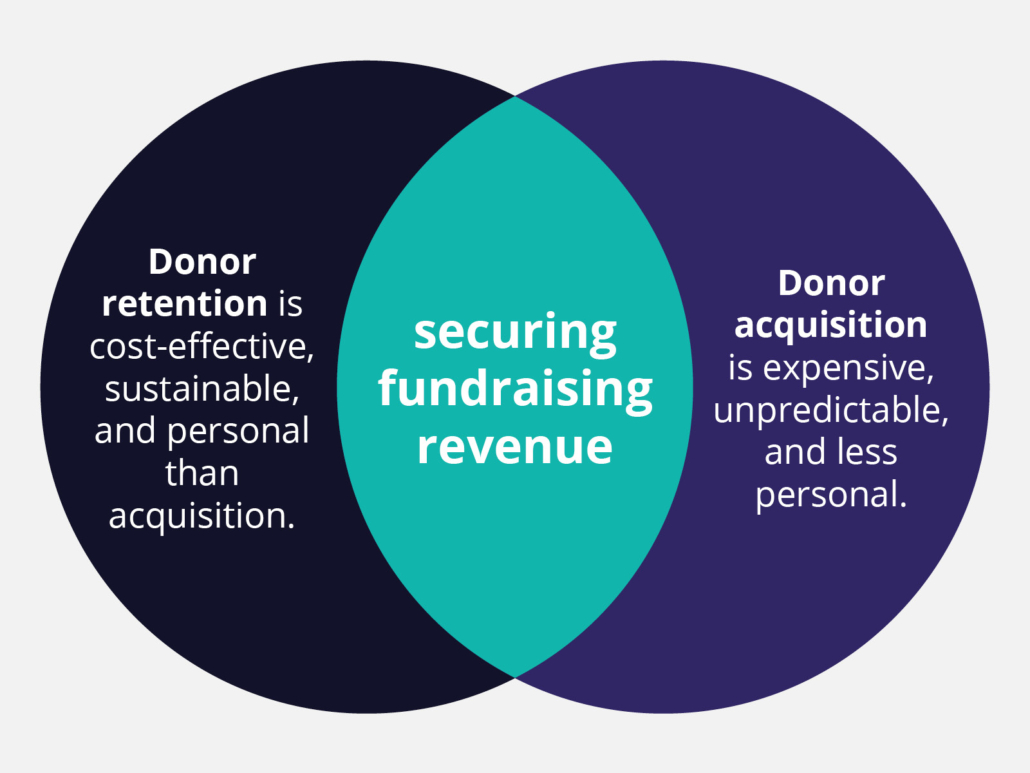
Compared to donor acquisition (the process of identifying new donor prospects and convincing them to donate for the first time), donor retention is more:
Cost-effective: It’s more affordable and efficient to keep existing donors than it is to attract new ones. After all, donor acquisition requires researching prospects, launching extensive marketing pushes, and building a case for support. Existing donors already know your nonprofit’s mission and have already provided you with their contact information, negating additional research and outreach.
Sustainable: Retained donors provide a reliable and predictable source of income, which is better for the long-term financial health of your nonprofit.
Personal: While donor acquisition requires building relationships from the ground up, effective retention relies on deepening existing donor relationships, which takes less time.
While both donor acquisition and retention are important to fundraising success, retention is a more feasible and efficient approach to maximize donations and increase supporter loyalty.
How is donor retention measured?
There are numerous significant donor retention metrics that your nonprofit should think about tracking as key performance indicators (KPIs), such as:
Donor retention rate measures the percentage of donors that give again after their initial contribution. Use this baseline metric to set donor retention goals.
Average gift size helps indicate whether retained donors are giving more or less over time. You could use your average gift size KPI to adjust your initial ask account to reflect your donors’ current ability to give.
Frequency of giving measures how often donors contribute to your organization. You might prioritize promoting your monthly giving program if your frequency of giving KPI is lacking.
Donor lifetime value measures the total value of a donor’s contributions following their initial contribution.
Donor retention cost measures how much you spend on outreach efforts to maintain existing donor relationships. By comparing this to your cost to acquire a new donor, your nonprofit can evaluate how effective and valuable your retention strategy is and adjust it accordingly.
All of these metrics provide data that you can use to optimize your donor engagement strategies from many angles.
What are the common reasons donors stop giving?
Understanding why some donors stop giving can help you proactively prevent churn and secure more repeat donations. While each donor is different, here are the most common reasons why they might stop contributing:
Lack of communication: If a donor hears radio silence after contributing, they might feel unappreciated or unsure that their gift had any real impact.
Too many fundraising appeals: While a lack of communication is problematic, you also don’t want to inundate donors with appeals or irrelevant, generic communications.
Poor donor journey: Donors may stop giving if they experience roadblocks in their donor journey, such as an unoptimized online donation form.
A shift in financial status: Your donor might cancel their gift if their budget has changed.
Loss of interest: If your nonprofit doesn’t keep your donors engaged, they might lose interest in your mission and stop contributing
Negative publicity: Controversy surrounding your nonprofit, its staff, or board members can yield a loss of trust from your donors.
Lack of financial transparency: If your donors don’t understand what their gift is being used for and your organization’s financial practices, it might lead them to distrust your use of their funds.
Competition: Donors may find another organization that better engages them or aligns with their values and decide to contribute to them instead.
Fortunately, your nonprofit can combat these reasons for churn and create a more connected and passionate donor community with the rest of the tips in this guide.
What are some important donor retention statistics?
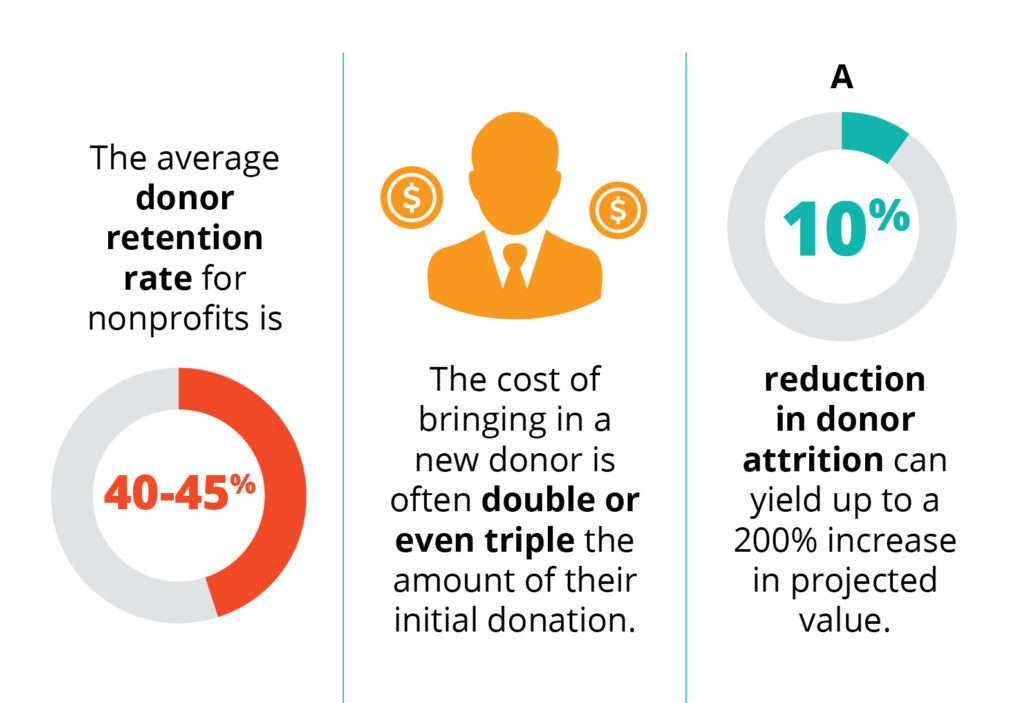
The average donor retention rate for nonprofits is40-45%.(GiveSmart).
The cost of bringing in a new donor is often double or even triple the amount of their initial donation. (Instil).
A 10% reduction in donor attrition can yield up to a 200% increase in projected value. (Instil).
Donor Retention Best Practices
Now that you understand the importance of donor retention, it’s time to implement retention best practices into your organization’s daily operations. Consider adding the following practices to foster a donor-centric culture:
1. Segment donor communications.
To keep donors engaged enough to keep giving over time, your team must personalize your outreach efforts as much as possible. Donors respond better to communications crafted with their own interests and priorities in mind, but don’t worry—you don’t have to spend all of your time painstakingly personalizing messages. Using segmentation techniques allows you to send customized messages efficiently.
Using your donor database, separate your donors into groups based on certain criteria, such as:
Profession: Donors in stable careers are more likely to have money to donate. Plus, their workplaces might have corporate philanthropy programs that you can promote for retention and increased giving.
Giving history: If a loyal donor who used to make an annual donation has stopped, you could craft a targeted message inviting them to re-engage.
Interests or preferences: Donors are more likely to renew their support for campaigns that they’ve shown interest in before.
Engagement level: This can include factors such as event attendance, volunteer involvement, and other activities outside of simply donating. Suggesting they get involved in another aspect of your nonprofit’s work can lead to higher engagement and another donation down the line.
Communication preferences: Segment your message delivery based on your donors’ communication preferences, such as email, direct mail, SMS, or phone call.
Segmentation is only possible when your nonprofit keeps thorough information in your database and frequently cleans it out. NPOInfo’s guide to nonprofit data hygiene recommends establishing a regular cadence for deleting duplicate records, appending contact information, and amending inconsistencies in your database.
2. Demonstrate impact.
Your donors want to know that their investment in your organization has a real effect on your beneficiaries. Win future donations by showing each donor their impact on the pursuit of your mission. You can demonstrate impact and secure recurring gifts by:
Sending detailed impact reports to each donor. After your campaign has finished, send your donors segmented messages detailing exactly how their contribution made a difference.
Creating an annual report. This document provides a great opportunity to present your organization’s progress and how particular donors helped you achieve your goals. Consider adding a donor shoutout section where you list the top donors and the influence of their contributions.
Introducing them to beneficiaries. Organize a donor beneficiary meet and greet (with permission) where donors can learn about their gifts’ impacts straight from the beneficiaries. This allows your supporters to forge a personal bond with beneficiaries and better understand that their actions significantly change lives.
No matter which strategy you take, ensure you demonstrate more than monetary impact to donors. They’re aware of how much they gave, but they might not know what the gift provided.
For instance, a food bank might tell a donor that their gift provided 30 families with meals for the rest of the month. This gives your donors a unique perspective on their own philanthropic practices and can inspire them to increase their engagement going forward.
3. Prioritize transparency and accountability.
To sustain the satisfaction of your donors, your nonprofit needs to win and keep their trust. Emphasize your commitment to transparency by:
Publishing your Form 990. Your organization’s Form 990 is publicly available and provides all financial and personnel information to potential supporters. Post your Form 990 on your website for easy access.
Regularly auditing data. Your nonprofit has a responsibility to your beneficiaries and stakeholders to keep accurate records. Integrate data hygiene into your daily operations by periodically reviewing important data and being accountable for any discrepancies.
Encouraging feedback. Ask donors and other stakeholders for their feedback on your nonprofit’s direction, effectiveness, and other considerations.
Allow your donors to rest assured that they’re supporting a reputable nonprofit by maintaining transparency throughout the fundraising process.
Creative Activity Ideas to Boost Donor Retention
Now that you understand the overall best practices you should integrate into your daily operations, it’s time to put them into action and pursue donor retention. Consider the following activity ideas that can help improve donor retention:
1. Provide ongoing involvement opportunities.
There could be any number of factors impacting your donors’ giving habits. Keep supporters engaged no matter their financial situation by offering numerous ways to get involved with your nonprofit’s mission, like:
Unfortunately, once a donor’s pattern of giving is changed, it’s a slippery slope to them churning and losing their passion for your cause. Avoid this outcome by keeping their enthusiasm alive with other ways to contribute to your cause. They’ll be more likely to start giving again once they’re able to!
2. Offer exclusive benefits and experiences.
Simply put, without your donors, your work wouldn’t be possible. Express your genuine gratitude for their contributions by recognizing donors, both publicly and privately. Here are some unique ways to show your thanks:
Launch a donor loyalty program. Loyalty programs incentivize continued engagement with rewards. For instance, you might offer a small gift basket for donors who renew their annual donation for the fifth year in a row.
Offer tokens of appreciation. Besides a loyalty program, you can give donors tokens of your thanks for individual donations. For example, you could offer a t-shirt with your nonprofit’s branding for gifts above $200.
Organize VIP experiences. Show your donors a good time by extending an exclusive invitation to your events. You could curate a VIP experience for donors above a certain threshold complete with free food, a backstage tour of your facility, and one-on-one conversations with officers or board members.
Your supporters will be impressed with your nonprofit’s outstanding commitment to donor appreciation and might renew their support to access more exclusive offerings like these!
3. Promote corporate social responsibility programs.
Leveraging corporate social responsibility (CSR) offerings, such as matching gifts and volunteer grants, are a powerful way to renew and increase support for your organization.
According to Double the Donation’s list of matching gift statistics, 84% of survey participants said they were more likely to donate to a nonprofit if a match is offered by their employer. However, only a fraction of CSR money is claimed each year due to employee unawareness of their company’s matching gift policy. To access the benefits of CSR, it’s up to your nonprofit to spread awareness of CSR offerings by:
Using a matching gift tool with auto-submission capabilities. Make it effortless for donors to secure a matched gift from their company by integrating a matching gift tool with auto-submission into your giving page. This software allows supporters to request a matching gift from their employers without the tedious work of submitting forms to the company. Instead, they simply input their work email address into the system and the software submits a request on the donor’s behalf.
Hosting a matching gift Giving Day. By hosting a Giving Day specifically geared towards generating matching gifts, you can activate urgency for your cause and inspire donors to check their employer’s matching gift programs.
Creating calls-to-action leading to your CSR information page. First, write an informational page on your website explaining everything a donor needs to know about CSR. Then, include clickable call-to-action banners in your email messages that promote the page.
Empowering your donors to leverage CSR supercharges your fundraising potential and inspires supporters to continue impacting your mission, with the help of their employer.
Send personalized milestone greetings.
Keeping in touch with donors about personal milestones is important for establishing rapport and showing that you care about them as people. Some milestones you could reach out on include:
Birthdays
Work anniversaries
Anniversaries of supporting your organization
Holidays
Wedding anniversaries
Using your CRM, keep track of any personal information you gather about your donors through casual conversations with them. Then, set reminders so you can send your custom messages on time. Don’t forget to make your messages pop by using your nonprofit’s branding or by sending an eCard.
Wrapping Up
Maintaining strong connections with donors over time can be difficult, especially when aiding your beneficiaries is your top priority. But, by incorporating donor retention best practices and activities, you can spark interest in your cause while cultivating long-term relationships and support.
Plus, your nonprofit has many options for structuring your retention efforts, from sending eCards to offering exclusive branded merchandise. Ultimately, as long as your team shows your authentic appreciation for your donor’s support and demonstrates their significant impact, you’ll have a sustainable donor retention rate for years to come.
https://nxunite.com/wp-content/uploads/2023/06/Donor-retention_feature.jpg8601880Adam Weingerhttps://nxunite.com/wp-content/uploads/2023/09/NXUnite-by-nexus-marketing-White-3.svgAdam Weinger2023-06-22 14:56:352023-06-27 15:02:50Donor Retention Ideas and Best Practices for Nonprofits